Should I Buy a Hybrid or an Electric Vehicle? (Part I)

My wife and I share one car.

This fact puts us in the minority among American households. According to a Pew Research study cited by Newsweek in 2008, 70% of American households own two or more cars.

We have avoided purchasing a second car because I am the only family member who commutes to work.

However, I am about to start a new position on Friday, which will require me to work market hours. For me, that will mean driving to BART and catching a train into the city at 4:40 am, to be at my desk before the stock market opens at 6:30 a.m. Pacific time.

Since the thought of piling the entire family into the car by 4:20 a.m. seems somewhat impractical, my wife and I are considering purchasing a second car.

I want to do my part for the environment, and it would also feel good to stick one to the Saudis. As such, I am considering purchasing a hybrid electric vehicle (HEV) like a Prius, an electric vehicle (EV) such as a Nissan Leaf, or a plug-in hybrid electric vehicle (PHEV) like a Chevy Volt.

However, I am also a capitalist.

Continue reading

Posted in Business, California, Clean Energy, Clean Tech, Climate Change, Energy Security, Finance and Economics, Investing, Predictions, Taxes | Tagged , , , , , , , , , , , , , | 27 Comments

America’s First Clash with Iran: Strategy Light, Tactics Heavy

Source: ©2011 Reflections of a Rational Republican

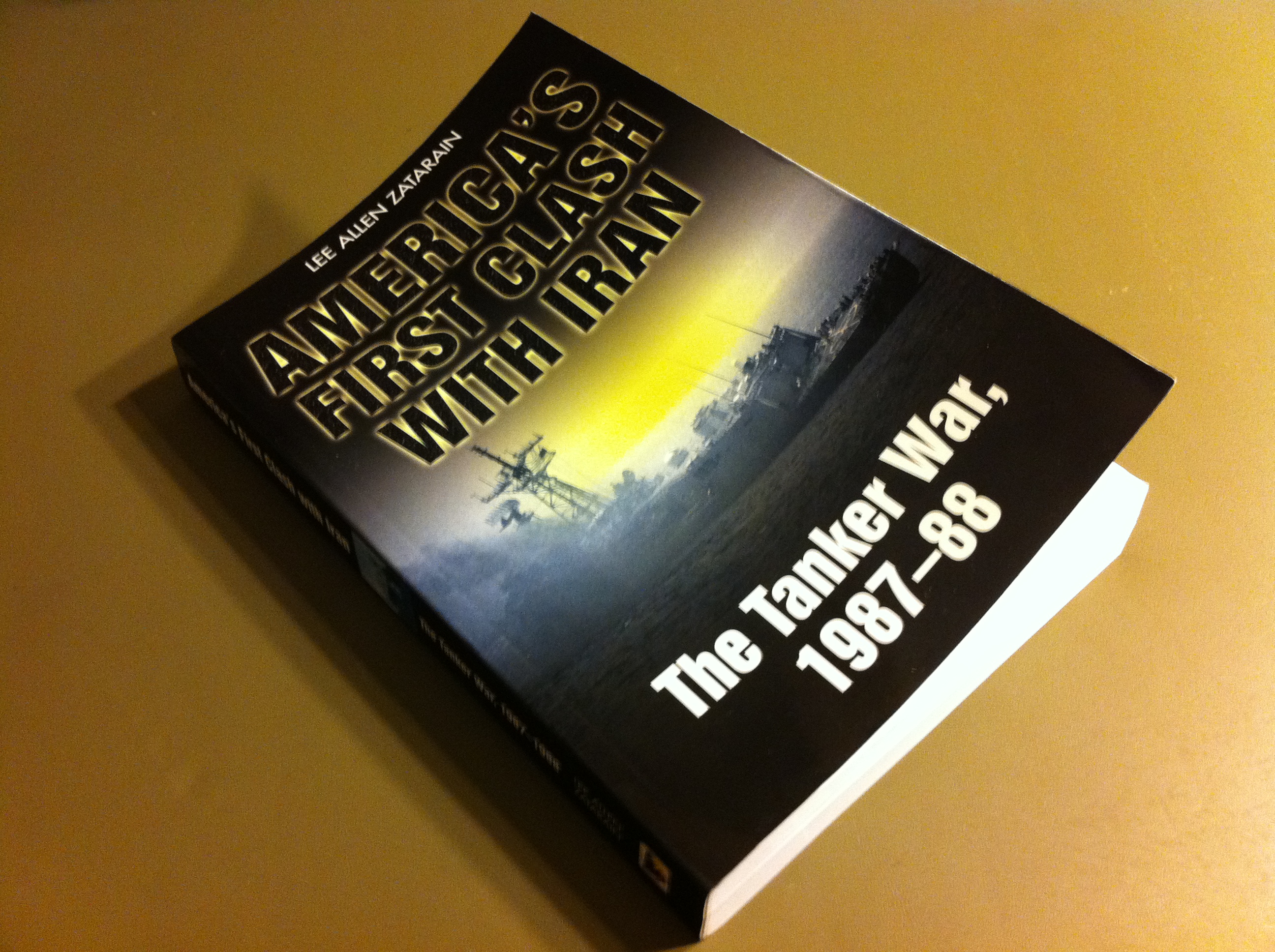
America’s First Clash with Iran: The Tanker War, 1987-88 is Lee Allen Zatarain’s well-researched and detailed account of the United States’ brief Persian Gulf conflict in the late eighties with Iran. It is a gritty, tactical, blow-by-blow account of the Marines, soldiers, and sailors involved in the conflict.

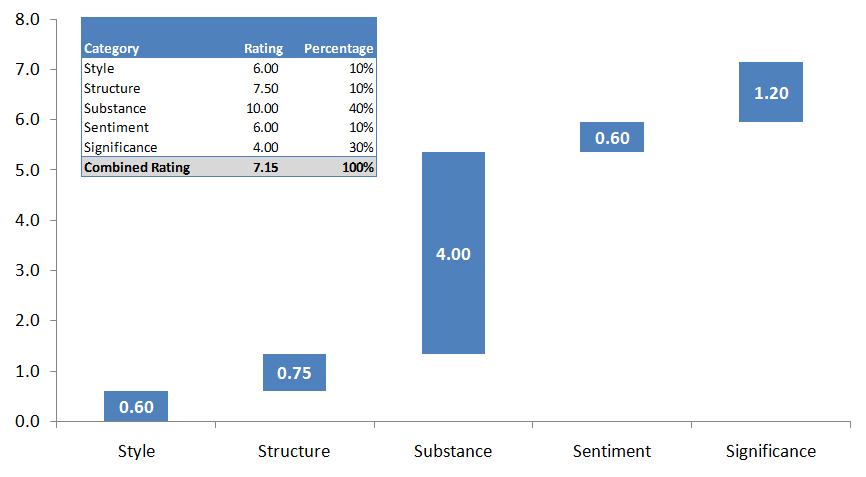
Style – 6.00

While America’s First Clash with Iran includes some details about the United States’ regional strategy at the time, it focuses primarily on the men involved in fighting the conflict. The book provides a unique window on the chaos inherent in any operational environment and the difficulties of making decisions under the “fog of war.” While the book’s style can be dry at times, for the most part, it provides a very straightforward account of a little known episode in American history. I rate the book’s factual, straightforward style a 6.0 out of ten.

Structure – 7.50

The author organizes the book chronologically. However, because some events occurred in different parts of the Gulf during the same days, it is sometimes difficult to keep track of events. While this does not happen often, it makes the timeline seem confusing when it does. Because of this organization, the book receives a rating of 7.5 out ten for structure.

Substance – 10.00

America’s First Clash with Iran seems to be one of the most comprehensive and well-researched accounts of this little known conflict. For anyone curious about American phase of the so-called Tanker War, this book is a must-read.

The book focuses on the tactical-level decision-making and actions of crews on individual ships. For instance, it effectively evokes the suspense of a naval captain of confronting the prospect of incoming Silkworm anti-ship missiles sinking his ship. It also reiterates the superiority of military management techniques in chaotic environments.

The book also provides a detailed account of the events that led to the tragic episode of the USS Vincennes and the accidental shoot-down of Iran Air Flight 655 resulting in two-hundred ninety civilian deaths. In doing so, it provides an intriguing account of how the psychological effects of stress and aggression can cloud effective decision-making.

Sentiment – 6.00

The book’s numerous illustrations of the frantic and uncertain “fog of war,” and how the military’s management system effectively and efficiently confronts these events, is a must-read for any civilian manager. The fact is that the military does this better than anyone I have seen in the civilian sector. Civilian managers, therefore, can learn a lot from reading this book. Because it reminded me of the military’s superior management and decision-making processes, it made me feel a bit nostalgic about my previous military experiences. However, the author’s writing still makes it difficult to put oneself in the place of many of the conflict’s participants without having spent any time on a naval warship myself. Therefore, I rate the book’s sentiment a 6.00 out of ten.

Significance – 4.00

Unless the United States starts bombing Iran’s nuclear program tomorrow, this book was a small blip on the radar screen when it comes to its significance in the broader context of American history. While the book was intriguing, it only rates 4.00 out of ten in terms of significance.

Overall Rating – 7.15
Source: ©2011 Reflections of a Rational Republican

The book’s overall rating is 7.15 out of ten, after assigning the appropriate weights to each item. The book is an interesting read if you are interested in very detailed tactical accounts of what transpired in the Gulf. If you are more of a big-picture person, you should steer away from this book.

Posted in Book Reviews, Defense, Energy Security, International Security, Middle East, Policy, Politics | Tagged , , , , , , , , , , | 3 Comments

Syrian Crackdown Accelerates

Over the past several months, Syrian President Bashar al-Assad has wavered between trying to appease protestors and cracking down on them. Neither tactic has been particularly effective.

Today, it seems the current President has finally reverted to the tactics his father employed so ruthlessly, yet effectively, in the 1980s, when he killed nearly 20,000 people in Hama.

Residents of Dara’a, a town of 75,000 people in southern Syria, reported that at least 8 tanks moved into the town at dawn accompanied by 4,000 to 6,000 troops. However, other estimates pointed to troop numbers in the hundreds.

Depending on the mission of Syrian forces, the ideal ratio to maintain an occupation of the town would be 1 soldier for every 25 civilians based an old RAND study of occupied Germany and Japan. Such an operation would therefore require about 3,000 troops.

That said, the number of troops is likely in the hundreds if the eight tanks observed are any indication of the mission’s overall effort. Since Syrian forces are typically arrayed in the old Soviet model, 8-10 tanks are indicative of a Motorized Rifle Battalion-sized element, which would likely include 300-400 infantrymen.

Either way, the deployment of armor is a noteworthy escalation in the crisis, which leads one to believe that the “peaceful” protestors may actually be well-armed. Based on the posture of the soldiers in the above BBC video, it seems clear that the Syrian Army is fighting an armed opposition.

Like Libya, it appears Syria is either in the midst or on the verge of a full-blown civil war, with the country Alawite ruling minority fighting for its survival against the Sunni majority.

Like Libya, there does not seem to be a good side, only two sides bent on exterminating each other.

Rather than intervening, the best policy for the United States would be to let Syria exhaust its resources in trying to put down an internal rebellion. Choosing one side over the other would be foolish at this point.

Posted in Defense, Energy Security, International Security, Middle East, Policy, Politics, Predictions, Terrorism, War | Tagged , , , , | 7 Comments

Interesting Interview of Andrew Breitbart on MSNBC

I recently discovered this interview of Andrew Breitbart on MSNBC.

I am deliberately not going to express my opinion on the interview, because I think the interview speaks for itself.

However, I am very interested in hearing people’s reactions.

Enjoy!

Posted in Media, Politics | Tagged , , , | 9 Comments

California Dreaming: Businesses Continue to Leave State

According to The Wall Street Journal, 70 businesses have left California this year at an average of 4.7 businesses per week. Twenty percent of these businesses will relocate to Texas, where the unemployment rate is 8% versus California’s 12%.

Over the last three years, Texas added 165,000 jobs, while California shed 1.2 million. California now has the second highest unemployment rate in the country after Nevada.

Many businesses cite California’s unfavorable regulatory climate and labor laws as key reasons why it is difficult to operate a business in the state. For instance, California is one of only three states that requires overtime pay after an eight-hour work day.

Adding to California’s woes are its fiscal troubles and failed experiment with direct democracy. Since California relies heavily on the “wealthy” to support its tax system, revenues tend to collapse during recessions.

Sound familiar?

According to The Economist, personal income tax accounts for over 50% of California’s revenue. Californians earning over $100,000 per year account for over 80% of income-tax revenue. The state allocates nearly 10% of general fund spending to prisons. Its credit rating is now the worst among the United States.

A major reason why California is nearly ungovernable is that its ballot initiatives have spun out of control. In the 1960s, only 9 initiatives qualified for the ballot. Between 2000 to 2010, that number increased to 74.

In turn, many of these initiatives either limit taxes or mandate spending, making it much more difficult for the legislature to balance the budget.

At this point, I am convinced that only a state constitutional convention can solve California’s woes. Frankly, citizen democracy has gone too far.

Posted in Business, California, Education, Finance and Economics, Politics | Tagged , , , , , | 14 Comments

Offensive Sports Teams and Cereals, Oh My!

Pino at Tarheel Red instigated a fairly spirited discussion on his site yesterday about the extremes to which political correctness has pervaded the national dialogue, particularly in the context of naming sports teams.

I attended Stanford as an undergraduate and have always been rather embarrassed by the name of the school’s athletic teams (Cardinal — not the bird, the color) and its odd mascot (The Tree). Of course, the Stanford Cardinal used to be the Stanford Indians, until the university caved to political correctness in 1972.

The Tree, Source: Stanford University

The debate on the site reminded me just how far institutions have taken politically correct thoughtcrime in this country. For instance, one of James O’Keefe’s first stings was his demand that Rutgers ban the cereal Lucky Charms from the Rutger’s dining hall because it was offensive to people of Irish descent.

In any reasonable world, O’Keefe’s claim is laughable, yet Rutgers ultimately banned Lucky Charms cereal from the school cafeteria because it negatively stereotyped Irish people.

It is one thing to strike a balance between offending people’s feelings and maintaining free speech, but quite another to support the extent political correctness has run amok in this country.

Posted in Education, Humor, Media, Politics | Tagged , , , , , , , , | 12 Comments

Happy Days are Here Again (If You Live in Washington’s Bubble)

Today, I posted my first article on Andrew Breitbart’s Big Government site contrasting the economic growth of the Washington D.C. metropolitan area with the miserable economic situation everywhere else.

Click here for the full article.

Posted in Business, Finance and Economics, Media, Policy, Politics | Tagged , , , , , , , , | 2 Comments

Tax Americana: Bread and Circuses Redux

“A democracy cannot exist as a permanent form of government. It can only exist until the voters discover that they can vote themselves largesse from the public treasury. From that moment on, the majority always votes for the candidates promising the most benefits from the public treasury with the result that a democracy always collapses over loose fiscal policy, always followed by a dictatorship. The average age of the world’s greatest civilizations has been 200 years. “

— Alexander Fraser Tytler, Lord Woodhouselee

The only way to solve the deficit problem is for Republicans and Democrats to reach a compromise over spending cuts and tax increases. That said, the President and his party seem to be resorting to the traditional class warfare tactics of the past to win votes.

As such, it is important to take a look at the numbers to get a sense of which constituencies currently bear the majority of the tax burden. To be fair, this analysis only looks at income taxes, so it leaves out much of the wealth that private equity barons made from dividends on carried interest payments, etc.. Nonetheless, the IRS data shows some interesting trends.

First, the top 1%, 5%, and 10% of tax filers have been assuming an increasing percentage of the United States’ overall income tax burden, while the tax burden of the bottom 50% has steadily declined. For instance, in 1986 the top 10% of income earners paid over 54% of income taxes. By 2008, that share increased by 15 percentage points to over 69%. In contrast, the bottom 50% of wage earners paid a little under 7% of income taxes in 1986. By 2008, that share decreased to under 3%.

Share of Income Tax Receipts, Source: IRS

The common rebuttal to the fact that the top 10% pays nearly 70% of income taxes is that the rich have become much richer in recent decades, while the poor have gotten poorer. The data seem to indicate this contention is indeed true. For instance, the top 10% of income earners accounted for 39.1% of the nation’s total reported income in 1986, but 47.6% of it in 2008. The bottom 50% accounted for 15.5% in 1986, but 12.5% in 2008. 

Share of Reported Income, Source: IRS

However, while the bottom 50%’s share of the income tax burden declined by 3.8 percentage points, its share of income only declined by 3 percentage points. In contrast, the top 10%’s share of the income taxes increased by 15 percentage points, while its share of income only increased by 8.4 percentage points.

To be fair, tax rates for top earners have come down from historical levels, and a tax increase of some sort will be necessary for the country to resolve its budgetary problems. A simplification of the tax code that both reduces rates and increases revenue would even be better.

That said, when a decreasing number of individuals fund the lion’s share of services for a growing population of people who provide very little to the treasury, government creates a ravenous beast that becomes increasingly very difficult to feed.

Soon (if not now), a situation will exist, in which the majority of the population  can vote for programs that they share no burden in funding. Once a majority of the population learns that it can vote itself funds from the public treasury, the collapse of the system as we know it is sure to follow.

Posted in Business, Finance and Economics, Policy, Politics, Taxes | Tagged , , | 8 Comments

The Wages of a Confused Foreign Policy

Since before the Obama Administration began its confused Libyan campaign, I argued against American involvement for several reasons. For instance, America has no vital interests in Libya and it imported very little of Libya’s oil. I also argued that America’s bombing of Libya would harm America’s broader regional non-proliferation efforts. By showing others that once America defangs a nation’s WMD programs, there is little to stop it from bombing that country shortly thereafter, America sent a mixed message to future proliferators.

I also had major problems with the President’s approach to the campaign. For instance, he ruled out ground forces at a time when he should not have been taking any options off the table.

Furthermore, the President engaged in the campaign without knowing much, if anything about the opposition he would be supporting.

Even today, the rebels do not agree who is in charge of their forces. General Khalifa Hifter recently told a reporter:

“I control everybody, the rebels and the regular army forces…I am the field commander, and Gen. Abdul Fattah Younes is chief of staff. His job is to support us in the field, and my job is to lead the fighting.”

However, the rebels’ civilian leadership insisted that Hifter’s claim was “not true” and that “General Younes is over him, this is for sure, and General Hifter is under him.”

To make matters worse, the first weapons shipment of 400 AK-47s went to neither general. Instead, the Arab nation donating these weapoons sent them directly to a civilian petroleum engineer, who was training other civilians.

The bottom line is that two months into the campaign, things appear to be more confused than ever. By not assuming any leadership in the endeavor, the President now presides over a NATO that is both confused and divided about what to do next.

The sooner the President can force a diplomatic solution, the better.

Posted in Defense, Energy Security, Finance and Economics, International Security, Middle East, Nuclear proliferation, Policy, Politics, Terrorism, War | Tagged , , , | 2 Comments

The Few, the Proud, the 3,111 Who Voted Against TSA Unionization

While it is no surprise that the majority of the TSA’s 44,000 airport screeners voted for unionization, it is worth noting that 3,111 brave souls voted against it.

Good for them.

My guess is that the majority of them are likely military veterans.

It is good to hear that some people still believe in personal accountability and responsibility. It is also noteworthy that some still resisted the yoke of union thuggery.

Alas, get ready for mind-numbing work stoppages and shift changes courtesy of your favorite government employee union.

Posted in Policy, Politics, Unions | Tagged , | 8 Comments